Chimneys and lead work
Lead work and lead flashing
£200 to £700 is the typical price to repair or renew lead flashing, without scaffolding. Lead is used to seal the joins between a roof and a chimney, a wall, a dormer or a roof window. Scaffolding can be an extra cost.
Post your roofing job to Premium membersTell us about your job once. Premium roofers who cover your area can then contact you.Describe your job
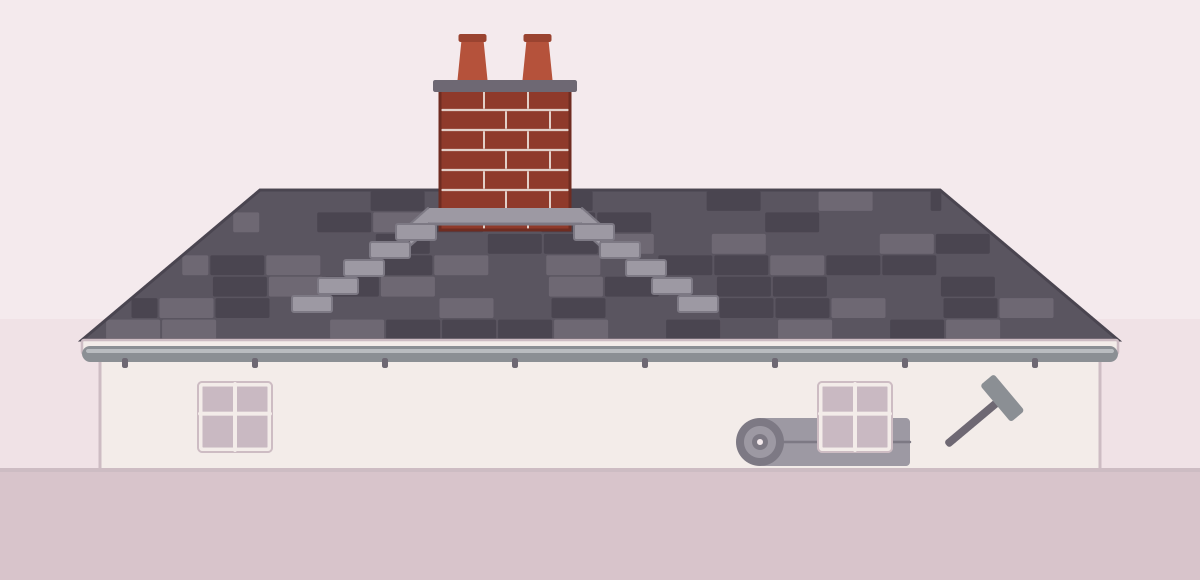
What this covers
What it costs. Most lead flashing repairs and renewals cost £200 to £700 without scaffolding. Full cost breakdown.
What the job covers
- Replacing worn or lifted lead flashing
- Repairing lead flashing around a chimney
- Lead flashing along walls, dormers and roof windows
- Lead valleys, abutments and parapet gutters
- Sealing leaks where the roof meets a wall or stack
What is involved
Lead flashing is a strip of lead sheet that keeps water out where a roof meets something upright, such as a chimney stack, a party wall or a dormer. It is cut and shaped by hand to fit the roof and tucked into the brickwork. Over time it can lift, split or work loose, and water then gets in. The first sign is often a damp patch on a ceiling or chimney breast.
A roofer begins by finding where the water is getting in, which is not always where the stain shows. A small split may only need a patch, and a patch repair to chimney lead costs £150 to £250. If the flashing is worn along its whole length, it is better to replace it. Replacing the lead around a chimney costs £350 to £460 without scaffolding, and £450 to £600 with scaffolding. Finding and fixing a flashing leak is often priced at £200 to £500.
Lead sheet comes in different thicknesses, and the roofer can tell you which they use and where. Besides chimneys, lead is used in valleys, along step flashings beside walls, and in parapet gutters. These are skilled jobs, and the price depends on how much lead is needed and how awkward it is to reach.
Do not go up on the roof yourself. If water is coming through a ceiling, turn off the electrics in that area if it is safe to do so and put a bucket under the drip. Ask the roofer to photograph the flashing before and after the work.
Choosing someone for the job
Ask where the water is getting in and why lead flashing is the answer. Ask what thickness of lead is being fitted, how much of the flashing is covered, and whether scaffolding is included. Ask for the price in writing, with any guarantee on the work, and for photographs before and after. Ask whether the firm belongs to a trade body or scheme, and look the business up on that body's own register.
Worth reading first:
Related jobs:
Common questions
What is lead flashing and what does it do?
Lead flashing is a strip of lead sheet that seals the join between a roof and something upright, such as a chimney, a wall or a dormer. It keeps rain from running into the gap and into the house.
How do I know if my lead flashing has failed?
Common signs are damp patches on a ceiling or chimney breast, lead that has lifted or split, and gaps where it meets the brickwork. Water can travel, so the stain may not be next to the fault. A roofer can trace the source.
Can lead flashing be repaired, or does it need replacing?
A small split or lifted edge may be patched. Flashing that is worn along its length, or has been patched before, is usually better replaced. The roofer should say which they recommend and show you photographs of the problem.
Is lead work part of chimney repair?
It often is. Flashing around the stack is one of the most common causes of leaks near a chimney, and it is usually checked together with the pointing and the pot. Lead is also used elsewhere on the roof, such as valleys and walls.
Should I have lead work done with other roof repairs?
If scaffolding is needed, it saves money to have the lead and any other work done on the same visit, so you pay for the scaffolding once. Ask the roofer to list everything they can see that needs attention.
Do I need scaffolding for lead flashing?
Sometimes. A low roof may be reached by ladder or a small tower, while a chimney stack or high wall often needs scaffolding. It can add to the price, so ask whether it is in the quote.