Guide
How to find a roof leak and what to do next
Water stains can sit a metre from the entry point. See safe loft checks, what to look for outside, what to do while you wait, and what finding a leak can cost.
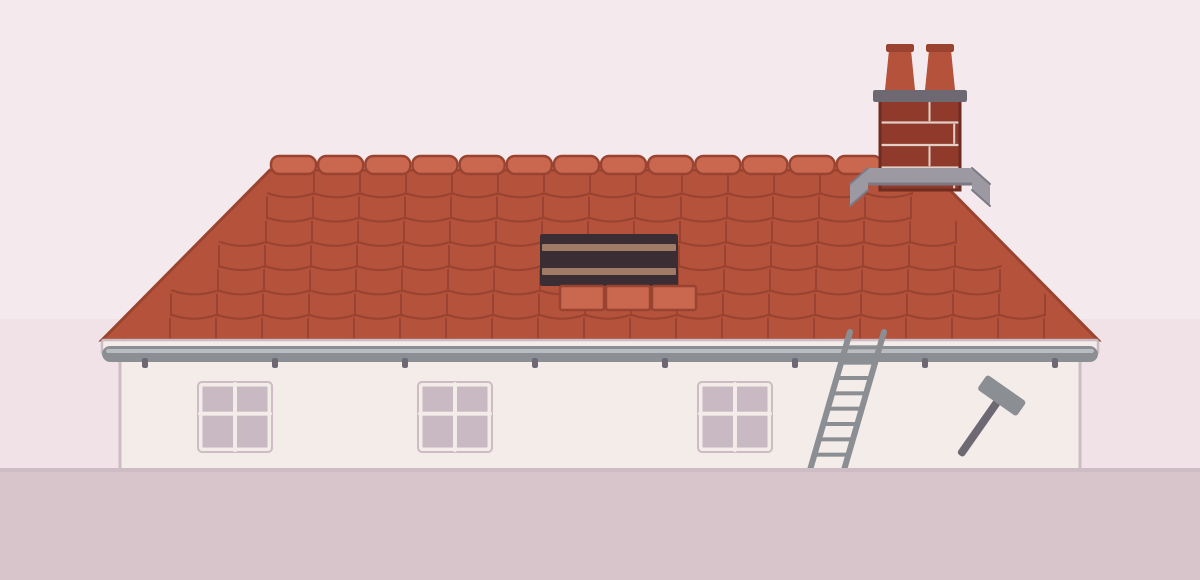
Keep safe first
If water is coming through a ceiling, move valuables away and put a bucket under the drip. If it is safe to do so, turn off the electrics in that area, and stay away from any fittings that are wet. Avoid any bulging ceiling area.
Do not go up on the roof yourself. Published guides say roof work is dangerous even for small jobs, and that you should not climb on the roof in wind, rain, snow, ice or after dark.
Look from inside
Published guides say a visible stain can be a metre or more from where water got in, because it runs along battens or rafters before it drops. The entry point is almost always higher and further back than the visible damp patch.
If the loft is safe to enter, check on a dry day with a torch. One guide says any daylight showing through the roof means a gap big enough to let water in. A roofer will usually start in the loft and follow the stain back.
Look from the ground
From the ground, look for missing, slipped or broken tiles, and for gaps at the ridge, valleys and chimney. Brown staining near the chimney breast is described in one guide as almost always a flashing problem.
A leak that shows up only in heavy downpours usually points to a small defect, such as a cracked tile, loose flashing or a partly blocked valley. Condensation and blocked gutters can look like a leak, so confirm the source first.
What a roofer may do
For stubborn or intermittent leaks, a roofer may run a controlled hose test, wetting one section at a time while someone watches indoors, or use a moisture meter to map the spread of damp. Thermal and moisture scans are another option, particularly on flat roofs.
Published guides give roof inspection or leak detection as £80 to £250 if no repair is carried out on the day. Temporary weatherproofing is given as £100 to £300, and one guide says emergency fixes may last only a year or two.
What happens next
Take photos of the damage and keep any receipts. If you plan to claim on home insurance, check your policy wording first, and see our guide on insurance and roof leaks.
Published cost guides give a leak repair as £150 to £1,200, depending on the cause and the access. Ask for a written quote that says what the problem is, what will be done and whether scaffolding is included.
Common questions
Why is the water stain not under the hole?
Published guides say water can run along battens or rafters before it drops, so the stain can be a metre or more from where it got in. A roofer will usually start in the loft and follow the stain back towards the roofline.
Can I go on the roof to look?
Do not go up on the roof yourself. Look from the ground or the loft if it is safe, and ask a roofer to inspect the roof. Published guides say all roof work is dangerous, even for small jobs, and advise against climbing on the roof in wind, rain, snow, ice or after dark.
How much does it cost to find a roof leak?
Published guides give roof inspection or leak detection as £80 to £250 when no repair is done on the day. A repair is priced after a look at the roof. Costs are higher if the roof needs scaffolding.
Where to go from here
- Roof repairs
- Roof repairs cost
- Emergency roof repair
- Emergency roof repair cost
- Roof surveys
- Roof surveys cost