Guide
Roof flashing: what it is and when it needs repair
Roof flashing seals the joint where a roof meets a chimney, wall or dormer. See the signs of failure, repair or replace, and typical costs.
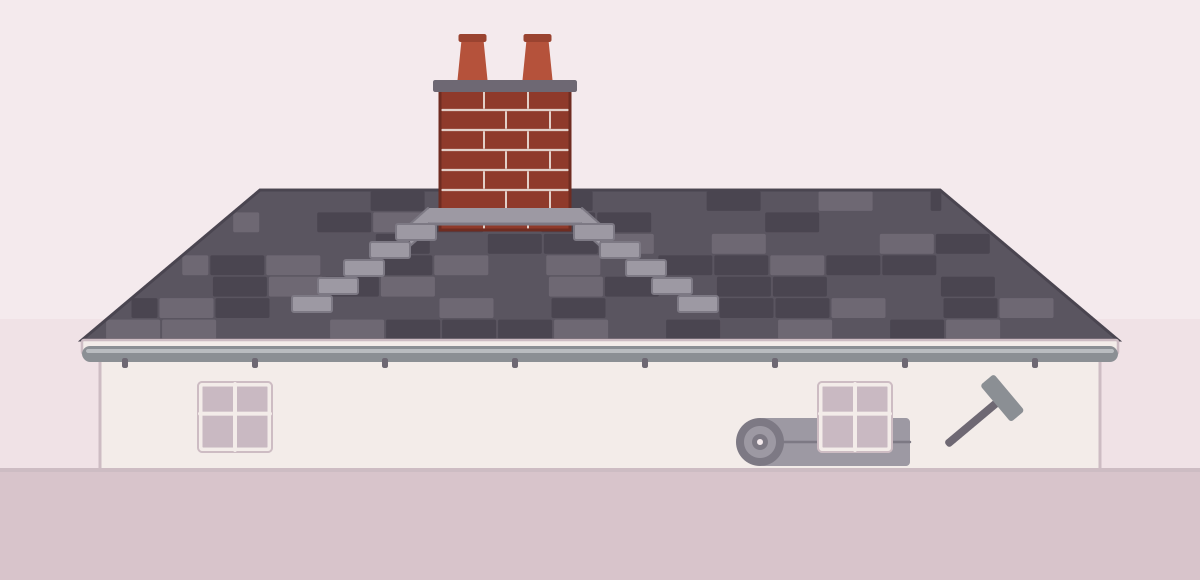
What roof flashing is
Published roofing guides describe lead flashing as the material that seals the junction between a roof covering and a vertical surface, such as a chimney stack, parapet wall, dormer or abutment. On a chimney it is the lead that seals the stack to the roof.
These joints are where water can get in if the flashing is cracked, loose or corroded, which is why flashing is so often named as a cause of leaks.
Why flashing fails
Published guides give several reasons: age and weathering, which thin the lead; the way it was first fitted; repeated repairs; and storms that lift or displace it. Older mortar fillets used in place of lead are described as a frequent cause of damp indoors.
Silicone mastic smeared over lead is described in one guide as a temporary measure that lasts two to four years.
Signs to look for
Damp patches on ceilings or internal walls near a chimney, damp on the chimney breast in the upper-floor room, and brown staining around the breast can all point to a flashing problem. After a storm, check from the ground (binoculars help) for lead that has lifted or slipped.
Do not go up on the roof yourself. Roof work at height carries real risks, and published guides say it is not suitable for most homeowners.
Repair or replace
A patch repair suits small areas of damage to lead that is otherwise sound. One guide says a patch will hold the rain out for a few years but will not last as long as a full renewal. Replacement is described as suiting several failing sections, lead that has thinned a lot, repeated failed repairs or problems with the way it was first fitted.
A published guide says correctly installed lead flashing can last for over 80 years.
What it can cost
Published cost guides give a typical span of £200 to £700 for repairing or renewing lead flashing without scaffolding. Scaffolding is often needed for work at a chimney, and it adds to the price, so ask whether it is included.
A written quote that says which flashings are covered, and whether scaffolding is in the price, makes quotes easier to compare.
Common questions
Is flashing the same as lead work?
Lead flashing is one kind of lead work. Published guides name step cover flashing, lead apron flashing and back box installation among the common types, so ask what the quote covers.
Can I seal flashing myself with mastic?
One published guide describes mastic over lead as a temporary measure lasting two to four years. It also says work at height is not suitable for most homeowners, so ask a roofer to look.
How do I know the leak is the flashing?
Published guides say a damp patch near a chimney often points to flashing, but a leak can travel. A roofer can check the loft and the roof to find where the water is getting in.